Asphalt and concrete surfaces, whether driveways, parking lots, or walkways, are significant investments that add value to your property. Proper year-round maintenance is essential to ensure these surfaces remain safe, functional, and appealing. Understanding seasonal challenges and adopting a proactive care strategy can prevent costly repairs and extend the lifespan of these materials. If you’re looking for a trusted partner to protect your surfaces, a reliable paving contractor St Louis, MO can provide expert guidance and service for every season.
Failing to maintain paved surfaces can lead to cracks, potholes, drainage issues, and even safety hazards. Routine inspections, cleaning, and timely repairs not only enhance curb appeal but also protect your investment from premature breakdowns caused by weather and traffic.
Both asphalt and concrete have their own vulnerabilities that become more apparent as the seasons change—like the expansion of cracks during summer heat or damage from freeze-thaw cycles in winter. Addressing problems as soon as they arise is crucial for minimizing further deterioration and costly replacements down the road.
In this guide, you’ll learn how to assess, repair, and protect your asphalt and concrete surfaces through every season with practical, actionable tips. For more in-depth advice, reputable resources such as Bob Vila’s driveway maintenance guide can help you understand the technical aspects of these tasks.
Spring Maintenance
The end of winter is a critical time to address and repair any damage that may have occurred. Winter’s freeze-thaw cycles and snow can leave surfaces vulnerable to further deterioration in the coming year.
- Inspect for Damage: Carefully look for signs of cracks, potholes, or surface wear that may have developed under the snow and ice.
- Seal Cracks and Potholes: Use crack sealants for narrow splits and patching compounds for larger potholes to prevent worsening over time.
- Reapply Sealcoating: Spring is the perfect season for sealcoating, which shields asphalt from UV, water, and chemical damage. Ensure conditions are dry and temperatures are above 50°F before application.
- Clean Up Debris: Remove accumulated sand, salt, and branches from winter to prevent surface abrasion and mold growth.
Summer Maintenance
High temperatures can soften asphalt and intensify existing issues. Maintenance in summer revolves around prevention and protecting your pavement from sun damage.
- Regular Inspections: Hot weather can cause cracks and surface problems to expand, so check your property frequently for new or worsening damage.
- Apply Reflective Coatings: Special coatings can lower surface temperature, reducing the risk of softening and helping your asphalt last longer.
- Maintain Drainage Systems: Ensure all drains and gutters are clear to prevent pooling water that undermines your surface. A well-maintained drainage system is also crucial for concrete surfaces, as it prevents cracks and deterioration caused by standing water.
- Protect Edges: The edges of pavement are most susceptible to crumbling; avoid driving vehicles on the edges and add support where necessary.
Fall Maintenance
Autumn is the ideal time to prepare your surfaces for the harsh winter conditions ahead. Proactive care during this time is key to minimizing costly winter damage.
- Clean Debris: Remove all leaves and organic debris. Decaying leaves can trap moisture, leading to mold and surface breakdown.
- Seal Cracks and Potholes: Address any open cracks or potholes to prevent water from seeping in and freezing, which can expand and worsen the damage during winter.
- Apply Sealcoating: Sealcoating in the fall is just as effective as in the spring, provided temperatures are warm enough, and the surface is dry. This provides your pavement with an additional layer of protection as winter approaches.
- Check Downspouts and Gutters: Ensure all water is directed away from paved surfaces to prevent ice from forming on driveways and paths.
Winter Maintenance
Cold weather and precipitation present unique maintenance challenges. Regular care is essential to prevent significant damage from snow, ice, and freezing temperatures.
- Snow and Ice Removal: Keep surfaces clear by using snow shovels or blowers for smaller areas and plows with rubber blades for larger lots to avoid surface scratches.
- Use De-icing Agents Wisely: Avoid harsh chemical de-icers that can erode asphalt and concrete over time. Opt for sand or cat litter when you need extra traction without corrosive effects.
- Monitor for Freeze-Thaw Damage: Be vigilant in checking for new cracks or potholes caused by repeated freezing and thawing, making temporary repairs as soon as issues appear.
- Limit Heavy Loads: Heavy vehicles can exacerbate winter vulnerabilities in your surface, so direct traffic away from weak spots when possible.
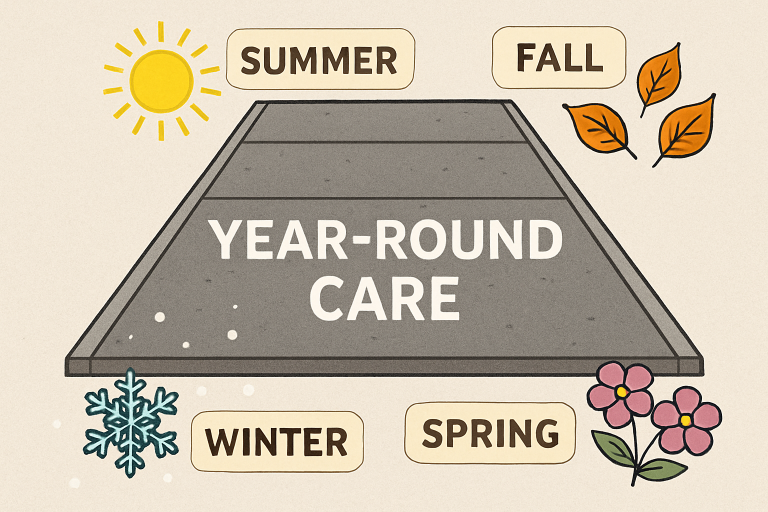
General Tips for Year-Round Care
- Regular Cleaning: Wash and sweep surfaces regularly to prevent the accumulation of sand, chemicals, and debris that can cause damage.
- Proper Drainage: Ensure water constantly drains away from your paved surfaces—a key principle highlighted by experts at This Old House.
- Professional Inspections: Schedule annual or biannual inspections from paving professionals to identify and correct problems early, maximizing the efficiency and lifespan of your investment.
- Pest and Weed Control: Regularly remove weeds growing in cracks and control pests that can undermine foundation strength.
By following these year-round care practices, you can maintain the appearance of your asphalt and concrete surfaces, protect your property’s value, and minimize the need for costly repairs. Consistent maintenance and seasonal awareness guarantee a safer, longer-lasting pavement for residential and commercial spaces alike.