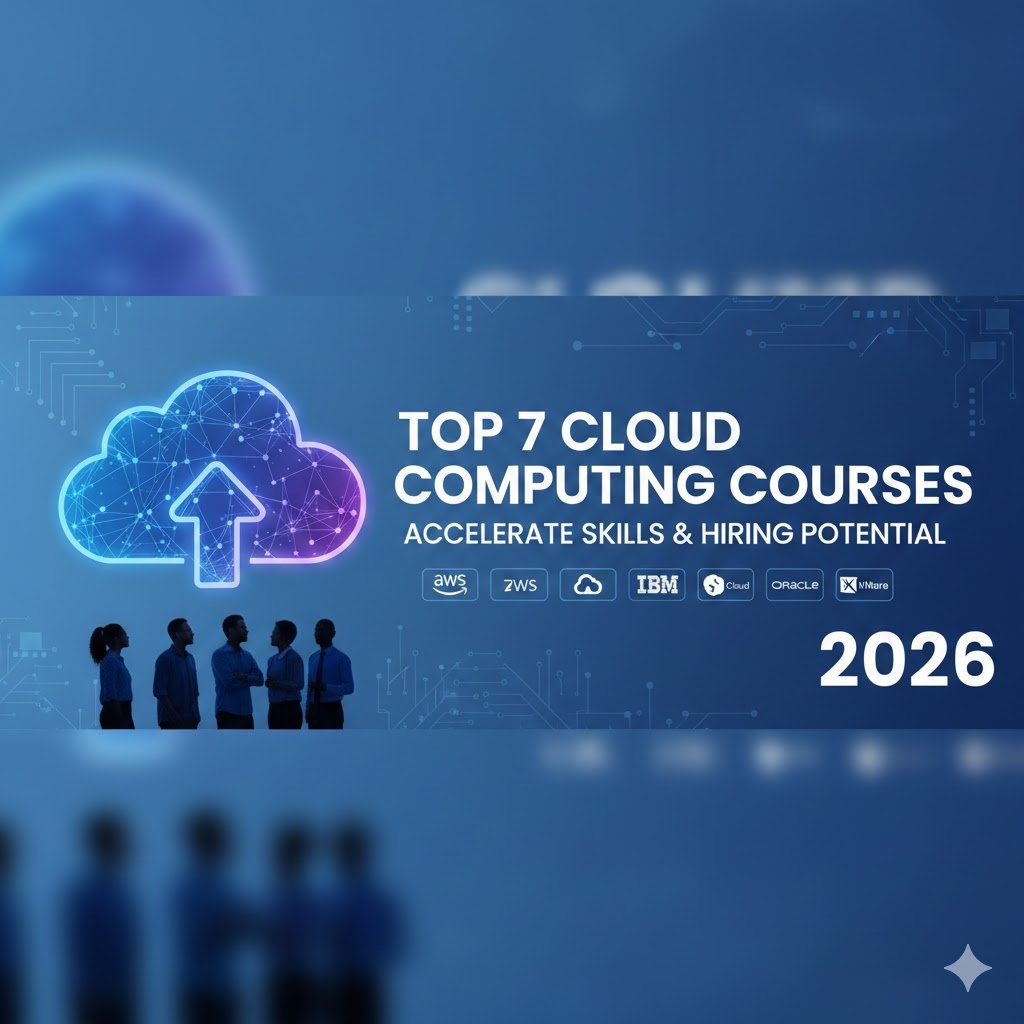
Cloud computing underpins modern products, analytics, and operations. Teams want people who can design secure architectures, control spend, and ship reliable services. The right program builds those skills with applied labs, business context, and a credential recruiters recognize.
You will find seven credible options below, balanced across providers and levels. Each choice emphasizes hands-on work, clear outcomes, and an industry-accepted certificate so you can demonstrate capability on the job in 2026.
Factors to Consider Before Choosing a Cloud Computing Course
- Career objective: Decide whether you want architecture, DevOps, platform administration, or product leadership responsibilities.
- Experience level: Pick foundations if you are new; select role-focused tracks if you already deploy workloads.
- Learning style: Self-paced works for busy schedules; cohorts help with accountability.
- Budget: Paid programs often include projects, labs, and certificates.
- Time: Match the duration and weekly effort to your work and family commitments.
Top Cloud Computing Courses to Launch Your Career in 2026
1) AWS Cloud Practitioner Essentials: Amazon Web Services
Duration: 12 hours 45 minutes.
Mode: Online, self-paced
Short overview: A clear introduction to cloud concepts, pricing, security, and core AWS services. Learners build literacy in global infrastructure, shared responsibility, basic architecture, and cost control.
Quizzes and examples help convert terms into working knowledge suited for stakeholder communication and entry-level cloud roles.
What sets it apart: Direct from AWS; aligned to the Foundational certification. Completion supports exam readiness and signals verified fundamentals.
Curriculum/Modules: Cloud value proposition, global infrastructure, compute, storage, networking, identity, security, billing, support plans.
Ideal for: Beginners and non-technical professionals who need confident AWS fluency.
2) Online Cloud Computing Course: University of Texas at Austin, Texas Executive Education
Duration: 6 months.
Mode: Online, part-time cohort
Short overview: A structured cloud computing course designed to build practical cloud proficiency for working professionals.
Expect guided learning, case work, and applied projects that translate architecture patterns and services into business outcomes.
The longer timeline supports deeper practice and portfolio-ready deliverables that help during internal transitions or external hiring conversations.
What sets it apart: Executive-oriented framing, capstone-style work, and a recognized certificate suited for career signaling.
Curriculum/Modules: Cloud foundations, core services, security and governance, cost management, migration roadmaps, and solution design with reviews.
Ideal for: Managers and individual contributors seeking structured progression and credentialing.
3) Introduction to Cloud Computing: IBM on edX
Duration: 3 weeks, 2–4 hours per week.
Mode: Online, self-paced
Short overview: A concise, vendor-neutral survey of cloud models, deployment options, and service responsibilities.
Emphasis is placed on definitions, benefits, and common risks so learners can evaluate providers and design basic solutions.
Short assessments reinforce vocabulary and decision criteria used in day-to-day discussions.
What sets it apart: Compact schedule with a verified certificate option for entry-level roles.
Curriculum/Modules: IaaS, PaaS, SaaS; public, private, hybrid; cost, security, compliance; provider comparisons.
Ideal for: Newcomers who want a quick but credible foundation.
4) Microsoft Azure Fundamentals AZ-900T00: Microsoft
Duration: 1 day (instructor-led options).
Mode: Online or classroom, instructor-led
Short overview: A focused primer on Azure concepts, core services, and governance tools, paired with lab exercises in the Azure portal.
The format fits busy calendars while providing just enough guided practice to prepare for the Azure Fundamentals certification pathway.
What sets it apart: Fast completion with precise alignment to the AZ-900 credential for signaling baseline Azure knowledge.
Curriculum/Modules: Cloud concepts, compute, networking, storage, identity, cost management, governance, and compliance features.
Ideal for: Professionals who need a rapid Azure orientation backed by a certification.
5) Post Graduate Program in Cloud Computing: Great Learning
Duration: 8 months.
Mode: Online
Short overview: An applied program covering multicloud concepts with emphasis on Azure administration and job ready skills. Learners in this pg in cloud computing path complete hands on labs and guided projects that demonstrate real implementation details, building a credible portfolio for cloud roles across infrastructure, security, and automation.
What sets it apart: Extended timeline for depth, structured projects, and a shareable certificate designed for career advancement.
Curriculum/Modules: Cloud architecture, Azure services, identity and security, automation, monitoring, cost optimization, certification preparation.
Ideal for: Professionals targeting an end-to-end upskilling path with project evidence.
6) Cloud DevOps Engineer Nanodegree: Udacity
Duration: About 4 months at a typical pace.
Mode: Online, project-based
Short overview: A practical track that blends cloud foundations with DevOps execution. You build infrastructure-as-code, automate deployments, and monitor services.
Mentored reviews and graded projects ensure you practice the tasks hiring managers actually test, creating artifacts you can showcase during interviews.
What sets it apart: a structured project portfolio with structured feedback and a certificate of completion.
Curriculum/Modules: AWS fundamentals, infrastructure as code, CI/CD, containerization, observability, and reliability practices.
Ideal for: Engineers moving into platform, SRE, or DevOps roles.
7) Oracle Cloud Infrastructure Foundations: Oracle University
Duration: 2 days, live virtual class.
Mode: Live online
Short overview: A concentrated introduction to OCI services and architecture. Sessions cover identity, networking, compute, storage, and database, along with pricing and governance.
The schedule fits professionals who need a quick orientation to OCI before supporting workloads or preparing for the foundations certification.
What sets it apart: Live instruction with an associated foundations credential path.
Curriculum/Modules: Core OCI primitives, security and IAM, networking, cost tools, basic automation, exam preparation pointers.
Ideal for: Teams standardizing on OCI or multi-cloud practitioners adding OCI literacy.
Conclusion
Cloud skills matter because they change how quickly teams can ship, how safely they operate, and how well they control cost. The cloud computing courses above balance concepts with practice and provide certificates recognized by hiring managers.
Pick one option that fits your experience, schedule, and target role. Commit to finishing the labs and producing a small portfolio. That combination of applied proof and an earned credential is what moves your resume to the top of the stack in 2026.