
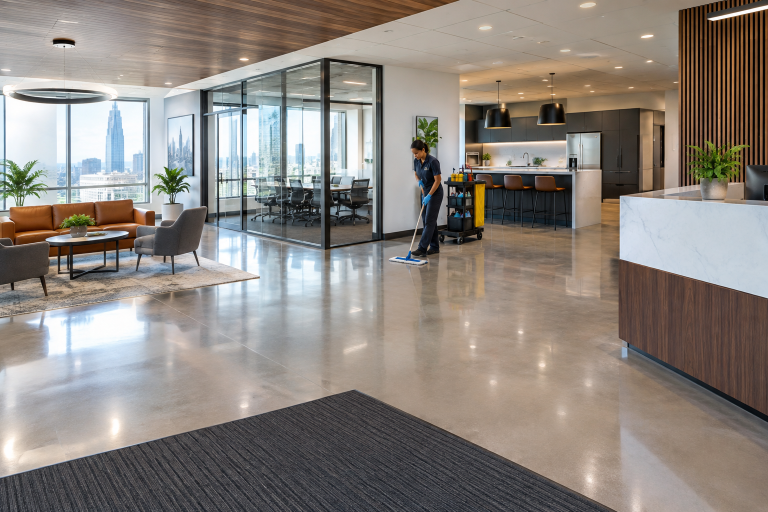
Key Takeaways
- Cleaning schedules should reflect traffic, occupancy, surfaces, and building operations.
- Restrooms, breakrooms, entrances, and shared touchpoints generally need more frequent attention than low-use spaces.
- Product selection should account for intended use, labels, worker safety, ventilation, and surface compatibility.
- Routine inspections and documented follow-up make it easier to measure and improve cleaning results.
- A plan should be reviewed when occupancy, weather, equipment, or building use changes.
Charlotte workplaces manage changing weather, busy entryways, shared workspaces, and a wide mix of building types. A written plan for commercial cleaning helps facility leaders set clear expectations for cleanliness, safety, and day-to-day consistency without treating every room the same.
From Uptown offices and medical waiting rooms to warehouses and education spaces, the right approach depends on how people use the building. Foot traffic, floor materials, operating hours, and the presence of shared equipment all affect which tasks deserve the most attention.
Why a Written Cleaning Plan Matters
A checklist is useful, but a site-specific plan is more effective because it defines the area, task, frequency, responsible role, and expected result. For example, a quiet records room may require periodic dusting and floor care, while a heavily used break room may need multiple checks during the day. Clear instructions reduce guesswork and help managers distinguish between a missed task and an unclear expectation.
Assess the Building Before Setting a Schedule
Before assigning work, walk through the facility at different times of day. Note where visitors enter, where employees gather, which rooms contain shared devices, and where rain, pollen, mud, or delivery activity affect floors. Documenting room lists, access restrictions, floor types, and visible trouble spots provides a practical starting point for an office cleaning schedule that reflects actual building use.
Questions to Ask During a Walk-Through
- Which spaces receive the most visitors or employee traffic?
- When are conference rooms, breakrooms, and restrooms busiest?
- Which areas have privacy, security, or specialized safety requirements?
- Where do outside moisture and debris enter the building?
- What rooms need cleaning outside normal business hours?
Divide the Workplace Into Cleaning Zones
Zones make a large facility easier to manage because each area can have its own task list and quality standard. Useful zones include public areas such as lobbies and reception counters; work areas such as offices and meeting rooms; support spaces such as kitchens and copy rooms; restrooms; exterior transition areas; and special-use spaces such as clinics, classrooms, production floors, or warehouses.
Grouping spaces this way also prevents an overly broad instruction like “clean all floors.” Entry mats, carpet, tile, sealed concrete, and other surfaces may require different equipment and methods. A zone-based plan makes those distinctions visible before work begins.
Set Daily, Weekly, and Periodic Frequencies
There is no single schedule that fits every workplace in Charlotte. Frequency should match use, soil, and operational risk. Daily work may include restroom servicing, trash removal, spill response, entryway attention, and cleaning of frequently handled surfaces. Tasks performed several times per week can include vacuuming, mopping, breakroom upkeep, and supply checks.
Weekly or periodic work may include interior glass cleaning, detailed restroom cleaning, low-level dusting, carpet and upholstery care, high dusting where it can be done safely, and floor maintenance. A simple frequency list should identify the space, task, timing, assigned role, and inspection method. This creates an organized record without relying on memory.
Prioritize High-Touch and High-Traffic Areas
Visible cleanliness and hygiene planning should work together. Door handles, elevator buttons, handrails, faucet handles, dispensers, appliance handles, shared phones, control panels, and reception surfaces often deserve priority because many people use them. During wet or high-pollen periods, entrance floors and mats may also need more frequent checks to help control tracked-in debris and slip hazards.
Cleaning and disinfecting are not interchangeable. Cleaning removes soil from a surface, while disinfecting requires an appropriate product used according to its label instructions, including the required contact time. Surface compatibility matters, especially for electronics, finished floors, and specialty materials.
Select Products With Safety and Performance in Mind
Strong fragrance is not a reliable measure of cleaning performance. Select products based on the surface, soil type, intended purpose, ventilation needs, and label directions. Products recognized through EPA’s Safer Choice program can be a consideration for purchasers seeking products with ingredients evaluated for human health and environmental impacts.
- Confirm whether a product is a cleaner, degreaser, sanitizer, disinfectant, or specialty treatment.
- Follow directions for dilution, storage, application, and disposal.
- Keep containers labeled, and remove any unidentified or expired products from the active inventory.
- Consider fragrance-free options where odors may affect occupants.
- Store chemicals so incompatible products are kept apart.
Protect Workers Who Handle Cleaning Chemicals
Cleaning staff need hazard information before using a product. Under OSHA’s Hazard Communication requirements, employers with hazardous chemicals in the workplace must provide exposed workers with labels, safety data sheets, and training for appropriate handling. A practical plan should also identify required gloves, eye protection, ventilation steps, spill procedures, and disposal practices.
Never assume that combining products improves results. Workers should not mix chemicals unless product directions specifically permit it. Secondary containers also need clear labels so no one has to guess what is inside.
Reduce Disruptions During Business Hours
Good timing protects both productivity and cleaning quality. Schedule noisy equipment outside meetings or customer-facing hours when possible, place warning signs around wet floors, and coordinate restroom work with occupancy patterns. For instance, a breakroom can receive a detailed cleaning just after lunch, with shorter checks during the morning rush and before the end of the workday.
Use Quality Checks to Improve Results
Quality control should not depend only on complaints. Room-by-room checklists, supervisor spot checks, task records, occupant feedback, photo records for periodic work, and corrective-action logs can reveal recurring issues. When the same task is repeatedly missed, the cause may be unclear instructions, inadequate access, unrealistic timing, or a need for additional training.
Review and Update the Plan
A cleaning plan should change when the building changes. Review it after renovations, occupancy shifts, new equipment, flooring replacements, seasonal weather changes, or repeated inspection concerns. Quarterly reviews are a practical baseline for many commercial settings, while facilities with specialized risks or heavy use may need more frequent adjustments.
Common Questions
How often should a commercial building be cleaned?
The answer depends on traffic, occupancy, building type, surface materials, and activities in the space. High-use restrooms, entrances, and shared areas generally need more frequent attention than low-traffic rooms.
What belongs in a cleaning scope?
Include spaces, tasks, frequencies, access rules, products, equipment, supply responsibilities, special services, inspection steps, and reporting expectations.
How can a facility tell whether its plan works?
Use consistent inspections, completed-task records, supply checks, occupant feedback, and trend reviews. A strong plan delivers reliable results while fitting the building’s daily operations.