The lowest-priced boat dock isn’t always the least expensive one to own. Wood and aluminum have different maintenance needs, repair costs, and lifespans that affect how much property owners spend over time. Comparing these materials beyond their initial prices can help waterfront homeowners determine which offers better value for their location, budget, and boating needs.
Why Aluminum and Wood Have Different Maintenance Costs
Wooden docks need regular attention because prolonged exposure to moisture, sunlight, and changing temperatures can cause boards to warp, crack, or deteriorate. Owners may need to replace damaged decking, inspect supporting members for decay, and apply protective finishes according to the wood type and exposure conditions. These expenses accumulate over the years, particularly when contractors handle the work. Aluminum boat docks avoid many of these problems because their structural frames do not absorb water or rot. However, aluminum still requires inspections for loose fasteners, damaged connections, and corrosion around incompatible metals. The difference lies mainly in the amount of material-related upkeep each structure needs.
How Much Does Material Durability Affect Dock Lifespan?
Dock longevity depends on construction quality, environmental conditions, and maintenance. Pressure-treated lumber can provide years of dependable service, but its performance varies with treatment quality, installation methods, and exposure to water. Constant moisture around joints can eventually weaken wooden components, particularly where drainage is poor.
Marine-grade aluminum resists many forms of corrosion and does not suffer from insect damage or wood decay. Its protective oxide layer helps limit surface deterioration, although salt deposits and contact with dissimilar metals can still cause localized corrosion. Proper hardware selection and drainage remain important for long-term performance.
Buyers comparing aluminum docks for sale should examine frame construction, alloy quality, and warranty coverage. A poorly engineered aluminum structure may develop fatigue problems, while a properly maintained wooden dock can remain functional for a considerable period. Material alone does not determine how long a dock will last.
Repair Expenses Can Change the Total Cost of Ownership
Wooden docks often require individual boards or supporting members to be replaced as they deteriorate. Small repairs may be manageable, but extensive decay beneath the decking can require larger sections to be rebuilt. Labor costs also increase when damaged components are difficult to reach from land or water. Aluminum docks generally avoid repairs related to rot, although damaged flotation units, worn anchoring hardware, and structural connections still need attention. Property owners researching aluminum boat docks for sale should compare the availability and replacement costs of individual components. A dock designed with accessible connections and serviceable parts can reduce repair expenses regardless of the framing material.
Is the Higher Upfront Cost of Aluminum Worth It?
Aluminum dock systems often carry a higher initial price than basic wooden construction, particularly when they include custom layouts, covered slips, or specialized anchoring equipment. However, purchase price represents only part of the investment. Maintenance supplies, contractor labor, repairs, and eventual replacement all contribute to the overall cost of ownership.
A useful comparison considers how much each dock may cost annually throughout its expected service life. For example, a lower-priced wooden dock requiring frequent refinishing and board replacement could become more expensive over time than an aluminum structure with fewer recurring maintenance needs. Actual savings depend on the waterfront environment and the quality of both systems.
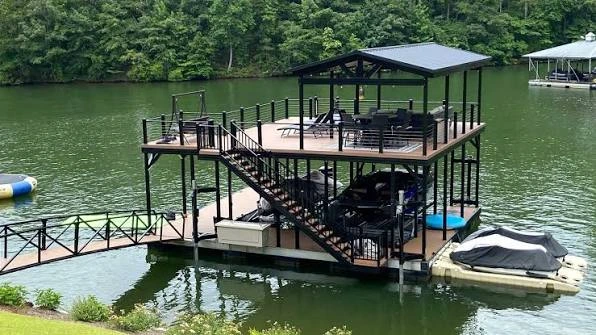
An aluminum floating dock may also offer practical advantages where water levels change considerably. Its flotation system allows the platform to follow the water, while suitable anchors control movement. Experienced floating dock builders can assess whether this arrangement makes sense for the property instead of recommending a material based solely on price.
Which Material Makes More Sense for Waterfront Property Owners?
Wood remains a reasonable option for certain waterfront projects, especially where owners prefer its appearance, have a limited initial budget, or can manage regular maintenance. Aluminum may be more attractive for properties exposed to frequent moisture, heavy use, or conditions that make repairs difficult. The best choice depends on how long the owner expects to keep the dock and how much maintenance the property requires.
For homeowners considering a longer-term alternative to wooden construction, Flotation Systems manufactures custom aluminum boat docks with floating configurations and anchoring options for different waterfront conditions. Its available systems provide choices for owners who want to reduce recurring upkeep while maintaining practical boat access. Comparing these designs with the expected maintenance and replacement costs of wood can help determine whether the additional upfront investment makes financial sense.