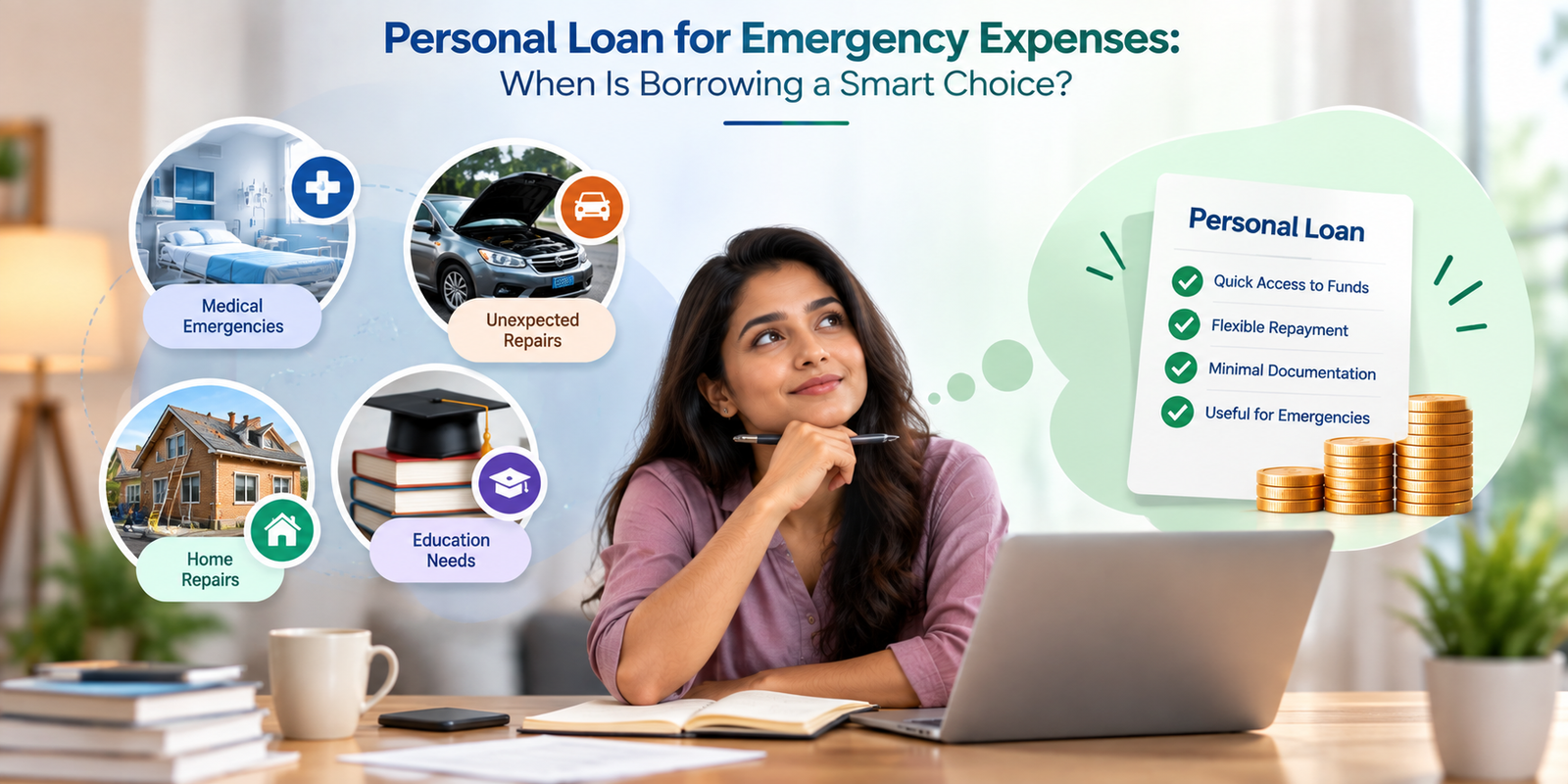
A personal loan can be a sensible option for emergencies when your savings fall short. It is helpful to apply for personal loans only when the total cost is clear, and the EMI fits your monthly budget. The rates for personal loans vary by lender and your profile, so checking first is crucial.
Quick Reads
- A personal loan suits urgent expenses that cannot be postponed and exceed savings.
- The actual cost of a personal loan includes the interest rate, APR, processing fee, GST, and other charges.
- Comparing the APR and KFS across lenders shows the full repayment before you sign.
- Borrow only when your savings are low, the cost is affordable, and the EMI suits you.
Financial emergencies such as paying off a large hospital bill or booking an urgent flight don’t come at a convenient time. A lot of families may not even have emergency funds for such situations, and this is exactly where a personal loan can be helpful. However, before you apply and choose one, make sure you actually understand if it fits your needs right now. Check what it actually costs you and whether the EMI that comes with it suits your monthly budget before making a rushed decision during an emergency.
When Does a Personal Loan Make Sense for an Emergency?
A personal loan is appropriate only when the need is urgent, can’t be deferred, and exceeds your available savings or insurance coverage.
Emergencies Where Borrowing Can Be Justified
Situations where the cost is immediate and the timing is fixed are usually where borrowing money makes the most sense. Such situations include:
- Large hospital bills that are not covered by your insurance.
- Repair work needed urgently in your home or vehicle.
- Emergency travel for family or work.
- A short income gap while an expected payment is delayed.
When to Wait or Look Elsewhere
If you’re facing one of these situations, then it may be a better idea to consider another route:
- The expense can be deferred.
- Savings or insurance already cover the cost.
- The EMI would stretch the monthly budget.
- The offered interest rate is high because of the borrower’s credit profile.
If you still think that borrowing might suit you better, then make sure you actually compare a personal loan with the other options that are available in the market.
Personal Loan vs Other Emergency Funding Options
A personal loan is one of the many options to get cash right away. Each method has different costs, speeds, and qualifications, so compare the offers and terms, not only the advertised rate.
| Option | Typical cost | Speed | Best when |
| Emergency fund | No interest | Immediate | The amount is available. |
| Personal loan | Varies by lender and profile. | Depends on the lender and verification. | You need a larger amount without pledging an asset. |
| Gold loan | Varies by lender. | Often quick | You hold eligible gold to pledge. |
| Loan against FD | Usually linked to the FD rate and lender spread. | Often quick | You have an FD but prefer not to break it. |
| Credit card EMI or cash advance | Depends on the issuer; cash advances may attract separate fees. | Usually immediate for a cardholder. | The amount is small, and the repayment window is short. |
| Salary advance or family loan | Often zero or minimal, if agreed. | Depends on the lender. | You need a small, short-term amount. |
Secured loans, such as gold loans and loans against FD, can be cheaper options. However, they require a pledge of an asset (either gold or a bank deposit). A personal loan is appropriate when you have neither. It offers a higher loan amount, and rates vary across lenders, so make sure to check the current rate on RBI or the bank’s website.
What an Emergency Personal Loan Really Costs
The interest is not the entire cost of a personal loan; it’s actually just a chunk of it. A personal loan can also carry processing fees, taxes, and prepayment or penalty charges.
Interest Rate and APR
The interest rate shows the main borrowing cost. The annual percentage rate (APR) is the annualized cost of credit, including applicable charges.
- RBI’s Key Fact Statement (KFS framework) requires lenders to provide the APR, charges, and an amortization schedule.
- APR does not usually include contingent charges, such as late-payment charges, so make sure you confirm these with your lender first.
Processing Fees and Other Charges
- Processing fee: Some lenders list a specific percentage plus applicable GST, in addition to the actual cost.
- Penal charges: These are lender-specific and must be disclosed in the loan documents and KFS.
- Foreclosure or prepayment charge: This depends on the lender and RBI rules. NBFCs cannot levy prepayment charges on floating-rate loans to individuals for non-business purposes.
Taken together, the interest rate, APR, processing fee, and other charges make up the true cost of a personal loan. Checking each one with the lender gives a clear picture of the total repayment.
How to Borrow Smartly in an Emergency
Follow these steps in order to keep a personal loan manageable:
- Borrow only what is needed. You can usually get a lower EMI and lower interest with a smaller loan.
- Check your credit report and eligibility before applying. A high score may improve the offer.
- Compare the APR and KFS across lenders. The KFS includes the APR and an amortization schedule.
- Confirm the lender’s regulatory status. Check the bank or NBFC on official RBI resources.
- Check all upfront and recurring charges. Look at the processing fee, GST, penal charges, foreclosure terms, and the amount credited.
- Pick a tenure with an EMI you can sustain. A longer tenure may lower the EMI but increase total interest.
- Prepay only after checking the agreement. The benefit depends on the outstanding principal, remaining tenure, and charges.
Wrapping It Up
A personal loan can genuinely help in emergencies. However, it’s not necessarily a default funding option. It works best when savings and insurance fall short, the total cost is clear, and the EMI fits the monthly budget. Lenders like Finnable offer personal loans up to ₹10 lakh, with interest rates starting at 16% per year. Options like these can be beneficial during an emergency when the cost is immediate, and the EMI fits safely in your budget.