
Key Takeaways
- Relocation can preserve a sound building when its current site creates a serious problem.
- Raising may reduce flood exposure while allowing the building to remain in place.
- Renovation can be practical when structural issues are repairable, and the site still supports the intended use.
- Demolition may be responsible when a building is unsafe, severely damaged, or has no feasible reuse plan.
- A reliable decision requires structural, site, permitting, cost, and long-term-use reviews.
One Building Can Have Several Possible Futures
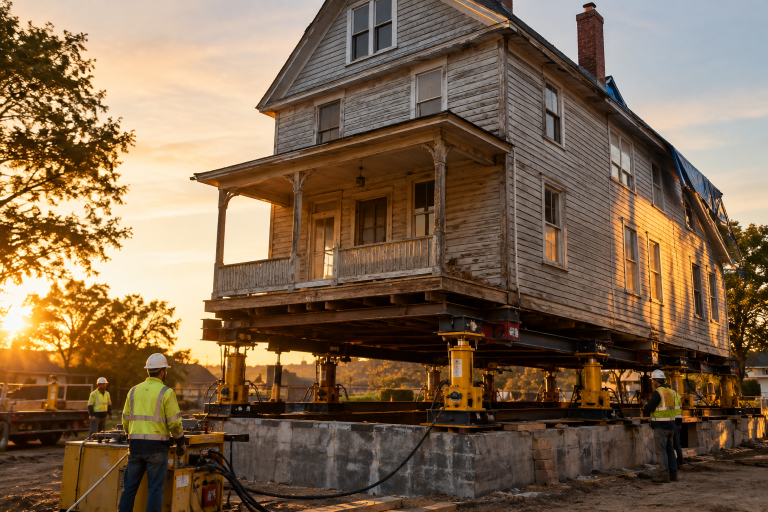
When an older or damaged building creates a challenge, the choice is not always limited to repair or demolition. Depending on the structure’s condition, flood risk, location, and future purpose, relocation or elevation may offer a better outcome. Property owners can visit this link to explore structural moving and lifting options before assuming removal is the only viable option.
The right answer varies for each property. A modest wood-frame house, a historic commercial building, and a heavily altered masonry structure each present different risks and opportunities. The goal is to compare the available paths carefully before committing money, permits, or irreplaceable materials to a project.
When Relocation Is a Strong Option
Moving a building often makes sense when the structure is fundamentally sound, but its current location no longer works. A building may stand in the path of planned development, sit too close to an eroding shoreline, occupy a flood-prone parcel, or contribute important historic character that would otherwise be lost.
Relocation begins with a feasibility review, not with a moving date. Engineers and experienced movers need to assess framing, foundation connections, floor systems, additions, chimneys, and weak areas that may require bracing. The destination must also have adequate space, soil conditions, access, drainage, and a foundation plan.
The travel route can determine whether a move is practical. Width, height, weight, turning radius, bridge limits, overhead wires, traffic controls, and utility coordination all need review. A short distance does not necessarily mean a simple move if the route includes narrow streets, sharp corners, or low obstructions.
When Raising a Building May Be Better
Elevation is often considered when a building remains useful on its present site but needs greater protection from floodwater. Raising can allow work on a new or improved foundation while keeping the property in its established neighborhood and utility service area. It may also create space below the main floor for uses allowed by local codes.
Elevation is not simply a matter of lifting a structure and building taller walls below it. The finished floor height, stairs, ramps, utility connections, drainage, access, foundation type, and local floodplain requirements must be coordinated as a single plan. For historic properties, balancing flood resilience with historic character is especially important because changes to height, setting, and exterior details can affect how the building is experienced.
When Renovation or Demolition Makes More Sense
Renovation may be the best course when defects are limited, the existing site remains suitable, and repairs can extend the service life. A thorough assessment can distinguish between cosmetic deterioration and serious problems involving settlement, rot, unstable masonry, water intrusion, or altered load paths.
Demolition can be the responsible choice when damage is advanced, movement would create unacceptable risk, contamination requires extensive remediation, or the building has no feasible reuse. Major fire damage, failed foundations, unsafe structural connections, and widespread deterioration deserve professional review. A quick walk-through alone may not reveal concealed damage or materials that could still be preserved.
Historic Value Changes the Conversation
Historic value involves more than age. A building may be significant because of its design, construction methods, former occupants, community role, or relationship to a larger historic district. Early contact with local preservation staff can identify review requirements and clarify whether the site itself contributes to the property’s importance.
Moving a historic building can retain much of its original fabric, but it may also change its connection to the original setting. The scale of planning involved is clear in a 38-day relocation of Hamilton Grange, which required careful lifting, route management, temporary support, and placement on a new foundation.
Compare Full Costs, Not Just Contractor Quotes
A meaningful comparison should account for the entire project, not only the visible construction price. Moving, raising, renovating, and demolishing can each incur costs that surface later in the planning process.
Costs to Include in the Review
- Engineering, surveys, inspections, and material testing
- Permits, traffic control, escorts, and utility coordination
- Temporary housing, storage, business interruption, or tenant relocation
- Foundation construction, drainage improvements, and site preparation
- Utility disconnection, relocation, and reconnection
- Hazardous-material assessment and removal where needed
- Historic documentation, restoration, and design review
- Demolition, hauling, disposal, and final site cleanup
Consider long-term value as well. A more expensive initial option may reduce recurring flood losses, retain useful square footage, preserve neighborhood character, or avoid the environmental impact of sending reusable materials to disposal.
Structural Materials and Site Conditions Matter
Construction type affects planning, but it does not automatically decide the outcome. Wood-frame buildings may be adaptable to lifting and movement, while masonry, stone, and heavily modified structures often need more extensive reinforcement and engineering. Attached buildings, shared walls, fragile finishes, and later additions can further complicate the work.
Before selecting a direction, confirm the building’s dimensions and weight, map a proposed route if relocation is under consideration, inspect the destination site, and identify every authority that may require approval. Building, zoning, transportation, utility, floodplain, and preservation requirements can all influence schedule and cost.
A Practical Decision Framework
Rate each option- relocation, elevation, renovation, and demolition- on a simple one-to-five scale for structural feasibility, site feasibility, permitting, total cost, schedule, preservation value, flood resilience, and future use. The highest score is not automatically the best choice, but the exercise can reveal where more investigation is needed.
Questions to Ask Before Choosing
- What is the building’s actual structural condition?
- Can the current site or destination site support the proposed work?
- Which permits, reviews, and utility approvals are required?
- What costs are likely to arise beyond the initial estimate?
- How long will the building be unusable?
- What is the backup plan if the preferred option becomes impractical?
- Will the completed project reduce future safety, flood, or maintenance concerns?
Conclusion
The best path rarely depends on a single factor. A sound, useful building may deserve relocation or elevation. Another may benefit from targeted renovation, while a severely compromised structure may require careful removal. By reviewing condition, site limits, historic value, approvals, total cost, long-term purpose, and future use together, owners and communities can make decisions that are safer, more practical, and better suited to the building’s future.