Table Of Contents
- Why Water-Smart Landscaping Matters
- Start With a Site Audit
- Choose Plants That Fit the Site
- Build a Smarter Irrigation Plan
- Reduce Runoff and Erosion
- Balance Turf, Beds, and Hardscape
- Plan for Consistent Maintenance
- Measure Results
- Common Mistakes to Avoid
- A Step-by-Step Action Plan
Jacksonville commercial properties contend with intense sun, humid summers, heavy rain, sandy or compacted soils, and, in some areas, salt exposure. A water-smart landscape responds to those conditions rather than fighting them. Thoughtful planning can help entrances, parking areas, walkways, and outdoor gathering spaces remain attractive while reducing avoidable water waste and drainage problems.
For property managers reviewing their outdoor spaces, a commercial landscaper can be one part of a broader site-management discussion. The most useful starting point is not a plant list. It is an honest look at how the property handles sun, water, traffic, and ongoing maintenance.
Why Water-Smart Landscaping Matters
Landscaping influences how visitors experience a commercial site. Healthy plantings, visible signs, clear walkways, and dry pavement can make a property easier to navigate. At the same time, poorly matched plants, overspray, and standing water can create recurring maintenance work.
Water-smart design does not mean covering every bed with stone or eliminating every lawn area. It means giving each area a purpose, using plants suited to its conditions, and applying water only where it is needed. A well-planned irrigation approach should account for different plant types, exposure levels, slopes, and soil conditions rather than treating the whole property as a single zone.
Start With a Site Audit
Before replacing plants or equipment, walk the property with a simple checklist. Visit after a heavy rain and again during the warmest part of a dry day. Those two observations often reveal drainage failures, heat stress, and irrigation gaps that are not obvious during a quick inspection.
What to inspect
- Sun, shade, reflected heat, and wind exposure
- Soil compaction, bare ground, slopes, and low spots
- Sprinkler coverage, leaks, broken heads, and pavement overspray
- Runoff near parking lots, sidewalks, downspouts, and storm drains
- Plant health, repeated plant losses, weeds, and pest damage
- Access for mowing, pruning, trash collection, and building maintenance
Choose Plants That Fit the Site
Plant selection should follow site conditions, not just appearance. A shrub that performs well in a protected courtyard may fail beside hot pavement or on a windy building corner. Group plants with similar water and light needs so that maintenance and watering decisions are simpler.
Useful categories for Jacksonville properties include low-water plants for difficult-to-irrigate areas, shade-tolerant plants beneath established trees, salt-tolerant choices near coastal exposure, and durable ground covers for slopes or spaces where bare soil is a problem. Florida-friendly landscaping guidance emphasizes matching plants to site conditions to conserve water and reduce unnecessary inputs.
Build a Smarter Irrigation Plan
Watering is a design decision as much as a maintenance task. Turf, trees, shrubs, and annual beds do not have identical needs. Separate them into zones whenever possible, then adjust schedules for season, rainfall, plant establishment, and visible stress.
- Check that spray heads do not water sidewalks, walls, or parked vehicles.
- Use drip or microirrigation where it suits planting beds.
- Inspect valves, filters, heads, and rain-sensing equipment routinely.
- Water during appropriate permitted hours and confirm current local requirements.
- Review schedules after landscape renovations, utility work, or plant replacements.
Reduce Runoff and Erosion
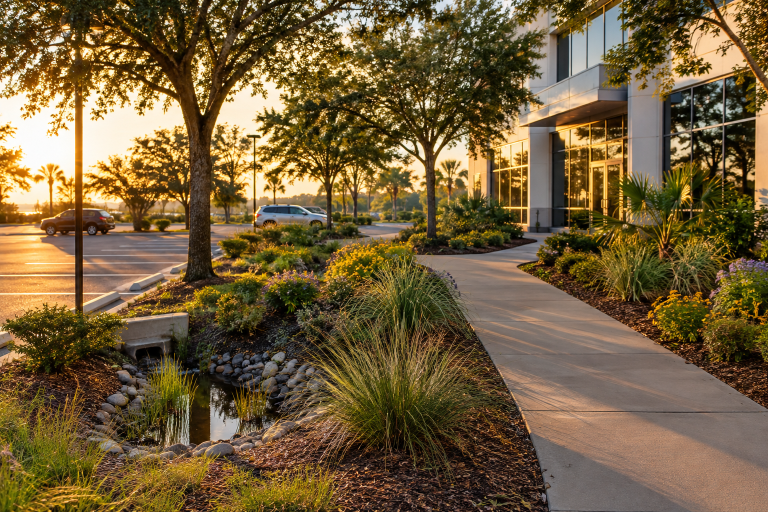
Rainfall that moves quickly across roofs, parking lots, compacted soil, and pavement can carry sediment, grass clippings, fertilizer, and debris toward drains. Mulch, ground cover, properly graded beds, swales, rain gardens, and suitable permeable surfaces can slow water and give it more time to soak into the landscape.
Where site conditions allow, green infrastructure can capture, absorb, and reduce runoff. The right solution depends on available space, soil, drainage patterns, utilities, and the need to keep pedestrian routes safe and accessible.
Balance Turf, Beds, and Hardscape
Not every portion of a commercial property needs the same treatment. Turf can be practical in functional gathering or recreation areas, but narrow strips beside buildings and parking islands often require frequent edging and irrigation without offering much usable space.
- Arrival areas: Prioritize neat planting, clear sightlines, and durable materials.
- Parking areas: Focus on visibility, shade where appropriate, and drainage.
- Building edges: Select plants that tolerate limited rooting space and reflected heat.
- Unused lawn: Consider ground covers, mulched beds, or adapted plant groupings.
Plan for Consistent Maintenance
A landscape should be designed around the maintenance it can realistically receive. Establish a written calendar for weekly cleanup, monthly inspections, seasonal pruning, mulch refreshes, and irrigation reviews. Keep plants away from signs, windows, walkways, mechanical equipment, and drainage features as they mature.
Measure Results
Appearance matters, but it is not the only measure of performance. Track monthly outdoor water use, irrigation repairs, recurring plant replacements, standing-water complaints, maintenance hours, and areas that repeatedly show heat or moisture stress. These records help distinguish a one-time issue from a design problem that needs a different solution.
Common Mistakes to Avoid
- Choosing plants for color alone without considering mature size, sun, soil, or water needs.
- Using one irrigation schedule for turf, trees, shrubs, and beds.
- Ignoring drainage until pavement, plant roots, or walkways are affected.
- Removing turf without replacing it with a stable, maintainable ground treatment.
- Using decorative rock as a universal answer to weeds, heat, and drainage.
- Skipping follow-up inspections during the first growing season after installation.
A Step-by-Step Action Plan
- Walk the property and map dry spots, wet areas, bare soil, and damaged plants.
- Review water bills, irrigation schedules, and repair records.
- Divide the site into zones based on use, sun exposure, soil type, and water needs.
- Address leaks, unsafe drainage, blocked views, and failing plants first.
- Select replacements that match the conditions of each zone.
- Update irrigation schedules and inspect the system after changes are made.
- Create a maintenance calendar and review performance throughout the year.
A strong Jacksonville commercial landscape can support curb appeal, practical site use, and more responsible water management simultaneously. The most durable results come from small, site-specific decisions that are inspected, measured, and adjusted as conditions change.