
Table Of Contents
- Introduction
- Why Prevention Comes First
- Start With A Simple Pest Check
- Remove Food, Water, And Shelter
- Seal Common Entry Points
- Build A Seasonal Routine
- Protect The Garden With Less Waste
- Choose Controls Carefully
- Know When To Call For Help
- Simple Monthly Checklist
- Final Thoughts
Pest prevention does not have to mean filling cabinets with sprays, disposable traps, and products that address only one symptom. A practical low-waste plan starts by making your home and garden less attractive to pests in the first place. For homeowners who need help assessing a persistent issue, Green Pest Services can be part of a broader prevention-focused approach.
The most effective routines are usually simple and consistent: inspect regularly, remove food and moisture sources, block entry points, and respond only when there is a real problem. This approach can reduce unnecessary treatments, limit waste, and help protect the beneficial insects and wildlife that share your outdoor space.
Why Prevention Comes First
Waiting until pests are visible in large numbers often makes a small problem more expensive and disruptive. Prevention gives you time to correct the conditions that support pest activity before insects, rodents, or plant diseases become established. The basic framework is integrated pest management, or IPM, which emphasizes observation, accurate identification, prevention, and measured action.
The four-tiered IPM approach begins with setting an action threshold and identifying the pest before choosing a control. In practice, that means one ant near a sink or one chewed garden leaf is a reason to investigate, not necessarily a reason to treat everything nearby.
Start With A Simple Pest Check
Before buying any product, take a slow walk through the home, yard, and garden. Check kitchens, pantries, basements, attics, garages, patios, and planting beds. Look for droppings, shed skins, gnaw marks, damaged leaves, nests, webbing, unusual odors, or recurring moisture.
Keep a brief record of where signs appear, when they are most noticeable, and whether the activity is increasing. Photos can help when identification is uncertain. This step matters because many insects are harmless, and some are useful predators or pollinators. Treating without identifying the cause can create waste while leaving the real problem untouched.
Remove Food, Water, And Shelter
Most household pests need food, water, and protected hiding places. Removing even one of these basics can make a meaningful difference. Store dry food, pet food, and birdseed in sealed containers. Wipe crumbs, grease, and spills promptly, and use trash containers with tight-fitting lids.
- Repair dripping faucets, leaking pipes, hoses, and outdoor spigots.
- Empty standing water from plant trays, buckets, toys, and unused containers.
- Reduce cardboard, paper piles, and clutter in garages, closets, and storage areas.
- Keep firewood, leaf piles, and yard debris away from exterior walls.
- Pick up fallen fruit and clean outdoor eating areas after use.
Seal Common Entry Points
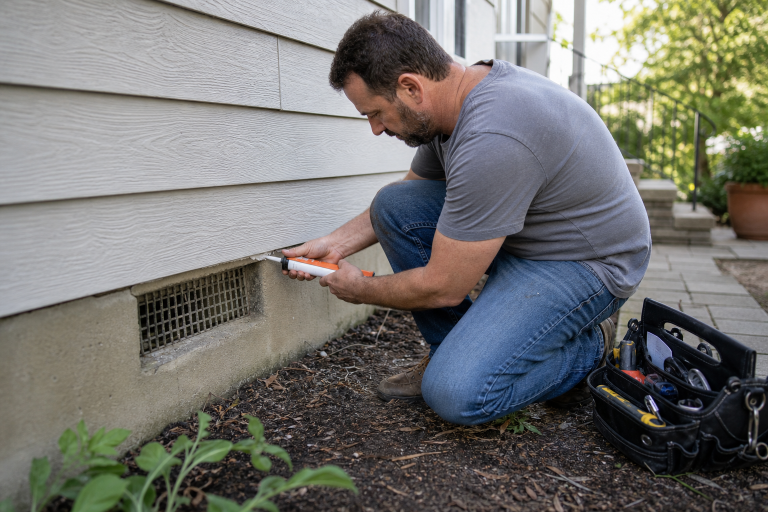
Small openings can give pests easy access to warm, dry shelter. Inspect door frames, window screens, utility penetrations, foundation walls, vents, and gaps around pipes. Replace torn screens, add or repair door sweeps, and seal cracks with an appropriate material for the surface.
Outdoor maintenance also matters. Trim branches and shrubs so they do not touch the roof or siding, and make sure crawl-space openings and vents have secure screens. These repairs can enhance comfort and moisture control while reducing entry points for insects and rodents.
Build A Seasonal Routine
Pest pressure changes with weather, food availability, and shelter needs. A short seasonal routine helps you catch new issues early.
Winter
Inspect attics, basements, garages, stored clothing, boxes, and firewood for rodent or fabric-pest activity. Sealing openings before cold weather encourages pests to move indoors.
Spring
Check screens and weatherstripping, clear water that collects after rain, and inspect new plants before placing them near established beds or houseplants.
Summer
Watch for ants, mosquitoes, stinging insects, and plant damage. Cover food during outdoor meals, empty water-holding containers, and thin dense vegetation near the home.
Fall
Remove fallen fruit and excess garden debris, clean gutters and downspouts, and inspect the exterior before cooler conditions send pests searching for indoor shelter.
Protect The Garden With Less Waste
A healthy garden does not require treating every insect as a threat. Check plants weekly, especially the undersides of leaves, new growth, stems, and the soil near the base. Good spacing improves airflow, while crop-appropriate planting locations reduce stress that can make plants more vulnerable.
Use row covers, mesh, hand removal, and other physical barriers when they fit the crop and season. Apply mulch thoughtfully, keeping it away from stems and the home foundation. For example, if squash leaves show fresh holes or wilting, inspect for the actual pest, eggs, or stem damage before reaching for a treatment. Regular garden scouting helps you respond while the problem is still limited.
Choose Controls Carefully
When prevention is not enough, match the response to the pest, location, and level of risk. Start with sanitation, exclusion, habitat changes, or physical removal. Targeted traps or products may be appropriate when activity continues, but broad indoor or outdoor applications should not be the default.
- Identify the pest with confidence.
- Decide whether it presents a health, safety, plant-health, or property concern.
- Choose the least disruptive, effective control first.
- Read and follow every product label exactly.
- Keep products in original containers and away from children, pets, food, and heat.
- Use approved local disposal options for unused pest-control products.
Know When To Call For Help
Professional support is sensible when pests return after basic prevention steps, spread to several rooms, or cannot be confidently identified. Act promptly when there are signs of termites, serious rodent activity, structural damage, or a stinging-insect nest near an entryway. Extra care is also important if someone in the home has allergies, respiratory sensitivities, or increased vulnerability to pests or control products.
Simple Monthly Checklist
- Check door seals, window screens, and visible exterior gaps.
- Look under sinks and near appliances for leaks.
- Inspect stored food, pet food, and trash containers.
- Remove standing water and clear debris outdoors.
- Inspect plants for fresh chewing, discoloration, or wilting.
- Check monitoring traps, if used, and record new signs.
Final Thoughts
A low-waste pest plan depends on steady habits rather than constant treatments. Clean storage, dry conditions, sealed openings, seasonal inspections, and careful identification prevent many issues from becoming difficult to manage. When control is needed, a targeted response is usually more practical than repeated broad treatments.