
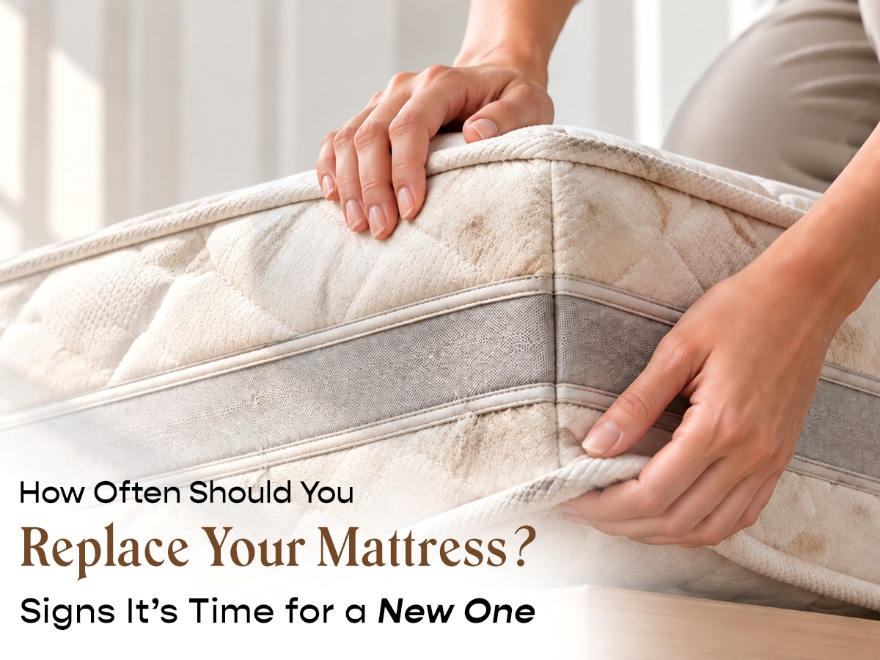
You wake up, stretch, and notice that your back feels a little stiffer than it did the night before. Maybe there’s a visible dip on one side of the mattress, or you find yourself sleeping better when you stay at a hotel. It’s easy to blame these things on a long day or a bad sleeping position but sometimes, the real problem is right beneath you.
Your mattress plays an important role in how comfortably you sleep, and like any other household essential, it doesn’t last forever. But how do you know when it’s genuinely time for a replacement?
How Often Should You Replace Your Mattress?
There’s no universal expiry date for every mattress. The lifespan depends on factors such as the mattress material, construction, quality, how frequently it is used, and how well it is maintained.
As a general rule, many mattresses may need replacing after several years of regular use. However, the condition of your mattress matters just as much as its age. A mattress that has lost its support or developed noticeable wear may need replacing sooner, while a well-maintained mattress can remain comfortable for longer.
Instead of relying only on the calendar, look for changes in your mattress and your sleep quality.
7 Signs It’s Time for a New Mattress
- Your Mattress Has Visible Sagging or Indentations
One of the clearest signs of mattress wear is visible sagging. If you notice a permanent dip where you usually sleep, your mattress may no longer be providing consistent support.
A mattress should help maintain a comfortable sleeping position rather than allowing your body to sink excessively into one area.
- You Wake Up With Aches and Stiffness
Occasional stiffness can happen for many reasons, but if you regularly wake up feeling uncomfortable and feel better after getting out of bed and moving around, your mattress could be contributing to the problem.
As a mattress ages, its ability to distribute your body weight evenly can change. This may affect how supported you feel during the night.
- You Sleep Better Somewhere Else
Have you ever slept at a hotel or stayed somewhere else and noticed that you woke up feeling unusually refreshed?
If you consistently find other beds more comfortable than your own, it may be worth taking a closer look at your mattress. Your sleep environment has several components, but the mattress is one of the most important.
- You Can Feel the Springs or Other Internal Components
If your mattress has springs that you can feel through the surface, or if parts of the mattress have become uneven, this can be a sign that its internal structure is wearing down.
Even without obvious physical damage, changes in the mattress’s structure can affect comfort and support.
- Your Mattress Makes More Noise Than It Used To
For mattresses with spring systems, increased squeaking or creaking can indicate that the internal components are experiencing wear.
While a little noise doesn’t automatically mean you need a new mattress, persistent sounds—especially when you change sleeping positions—are worth paying attention to.
- You’re Constantly Tossing and Turning
A mattress isn’t necessarily the only reason you might have trouble settling down at night. Room temperature, stress, lifestyle habits, pillows, and other factors can all affect sleep.
However, if your mattress feels uncomfortable no matter how you position yourself, it may be time to consider whether it still suits your needs.
- Your Mattress Looks and Feels Worn Out
Sometimes, the simplest signs are the most obvious. Discolouration, uneven surfaces, deteriorating materials, or a general loss of comfort can all indicate that your mattress has reached the end of its useful life.
Your mattress doesn’t have to look brand new to provide good support, but significant deterioration shouldn’t be ignored.
What Can Affect a Mattress’s Lifespan?
Two mattresses of the same age may not have the same level of wear. Several factors can influence how long a mattress remains comfortable.
Material and construction: Different mattress materials have different durability characteristics.
Usage: A mattress used every night will naturally experience more wear than one used occasionally.
Weight distribution: Regular pressure in the same areas can contribute to uneven wear over time.
Maintenance: Using a suitable bed frame, rotating the mattress when recommended, protecting it from spills, and keeping the sleeping surface clean can help maintain it.
Environmental conditions: Excessive moisture and poor ventilation can also affect the condition of bedding and mattresses.
Should You Replace Your Mattress Even If It Still Looks Fine?
Not necessarily but appearance isn’t the only factor to consider.
A mattress can look perfectly acceptable while its internal materials have gradually lost some of their original support and responsiveness. If you’re consistently uncomfortable, waking up tired, or noticing that the mattress no longer feels supportive, those changes deserve attention.
At the same time, replacing a mattress purely because it has reached a particular age isn’t always necessary. Consider its current condition, your comfort, and whether it still meets your sleeping needs.
Choosing a New Mattress: What Should You Look For?
When replacing your mattress, don’t choose one simply because it’s popular or heavily advertised. Think about what actually matters to you.
Consider:
- Firmness: Do you prefer a softer, medium, or firmer sleeping surface?
- Sleeping position: Side, back, stomach, and combination sleepers may have different comfort preferences.
- Body support: Look for a mattress that feels supportive without creating uncomfortable pressure points.
- Motion isolation: If you share your bed, a mattress that limits movement transfer may be useful.
- Temperature: If you tend to sleep warm, consider materials and designs intended to promote airflow and breathability.
- 100- Trial period: A 100-trial period can be particularly useful because a mattress may feel different after several nights than it does during a quick showroom test.
Why Consider SleepyCat for Your Next Mattress?
If you’re looking for a mattress designed around modern sleep needs, SleepyCat is one brand worth exploring. Its range includes mattresses designed for different comfort preferences and sleep requirements, making it easier to find an option that suits your routine.
One of its popular options is the SleepyCat Original Mattress, designed to offer a comfortable balance of support and cushioning for everyday sleep. Its thoughtfully designed construction makes it a practical choice for sleepers looking for a supportive yet comfortable mattress for regular use. Whether you’re replacing an old mattress or upgrading your current sleep setup, the Original Mattress can be an option worth considering.
With a 100-night free trial, customers can experience their chosen mattress at home and decide whether it suits their comfort and support preferences.
Summary
Replacing a mattress isn’t something you necessarily need to do on a fixed schedule. Instead, pay attention to the signs your mattress is giving you.
If it’s sagging, losing support, becoming uncomfortable, or affecting how well you sleep, it may be time to start looking at your options. And when you do replace it, consider your sleeping position, comfort preferences, support needs, and the mattress’s construction, not just its price or appearance.
After all, a mattress is something you use every night. Choosing one that works for your body and your sleep habits can make your entire bedtime routine feel more comfortable.