Some career paths don’t fit any template. Jean-Christophe Thery’s is one of them. Before founding MusaArtGallery — an online store now carrying more than 9,300 wall art pieces, sold mostly to American customers — he was a guy with a backpack, a tight budget, and far more questions than answers.
The starting point: a life that didn’t fit
A logical sequence, socially legible, and deeply unsatisfying. That’s the rat race in a sentence: you run, you advance, you tick boxes, and nobody remembers what the boxes were for.
“I never had a problem with work,” he says now. “I had a problem with not knowing what I was working toward.” The break itself wasn’t dramatic. No grand resignation speech. Just a decision — leave, see something else, and stop postponing the question.
The backpack as a business school
The years on the road turned out to be an accelerated course in commerce. Negotiating in a language you don’t speak. Managing a cash position that fits in your pocket. Improvising when the plan collapses. Understanding that the same object carries wildly different value 250 miles apart.
Those are, almost exactly, the skills of an e-commerce operator. What backpacking teaches best is tolerance for uncertainty — the ability to keep moving without complete information. And launching an online store is precisely eighteen months of moving without complete information.
It was also during those years that his relationship with imagery shifted. Craft markets, street murals, neighbourhood galleries: in those settings, art isn’t a museum-grade luxury object. It’s part of daily life. That idea would eventually become the spine of the whole business.
Why art, of all things?
E-commerce offered a hundred easier entry points. Phone accessories. Supplements. Seasonal gadgets. Thery picked the hardest one — a product that is aesthetic, subjective, and requires the customer to picture it on their own wall before buying.
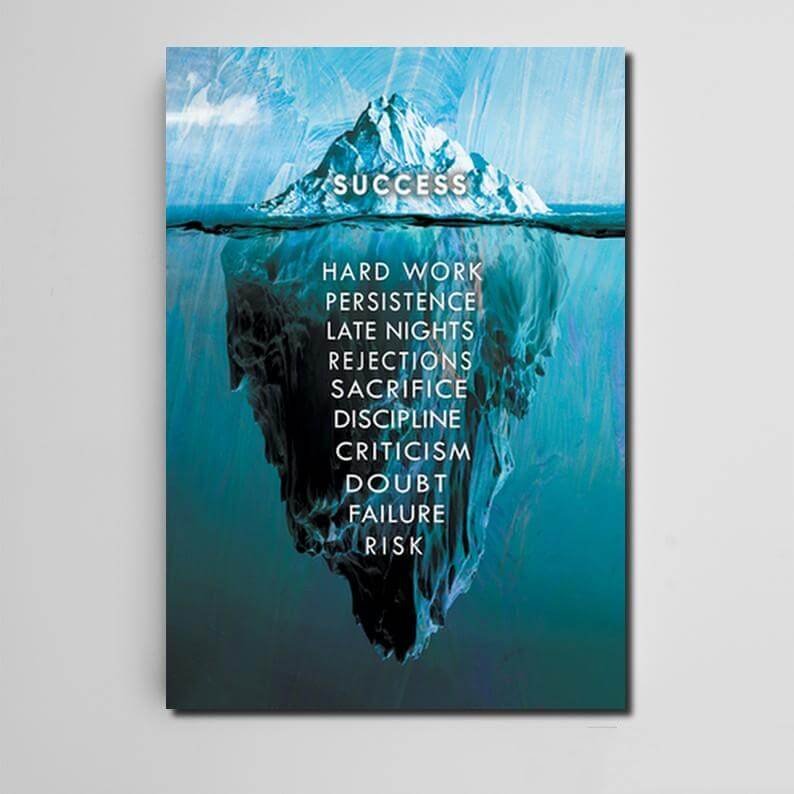
The logic holds up, though. An accessory gets replaced; a piece of art gets installed. Average order value is higher, return rates are lower, and — crucially — a brand can actually build an identity, which is impossible in a commodity market. That bet is what produced the motivational canvas collection, still one of the most visited corners of the catalogue.
One gallery, one operator
What makes MusaArtGallery unusual isn’t only the size of the catalogue. It’s that one person handles the art direction, the SEO, the fulfilment logistics, the customer service, and the technical integrations.
In practice: selecting and publishing artwork, writing product copy, maintaining the site’s SEO architecture, managing print-on-demand production flows, running social campaigns, reading the analytics. Work that comparable brands typically spread across five to ten people.
This isn’t presented as a feat. It’s a consequence. Staying a solo operator means refusing to rebuild internally the exact structure you left. The cost is real — the days are long — but the trade-off is deliberate.
What the story actually says
It would be easy to compress this into a slogan: quit everything, travel, become free. That would be false, and Thery says so himself. The travelling didn’t create the business. It created the mental space required to imagine one.
What built MusaArtGallery was years of deeply unglamorous work: learning SEO, understanding conversion mechanics, testing, fixing, repeating. The visible part — thousands of pieces spanning everything from modern abstract art to Japanese prints — sits on top of an enormous amount of invisible work.
That’s the message he posts about regularly on his LinkedIn profile, where he documents the unfiltered mechanics of building an e-commerce brand solo: the numbers that work, the ones that don’t, and the calls he’d make differently.
Leaving the rat race, in his case, never meant working less. It meant choosing exactly what he works on.