Screen printing remains one of the most popular and profitable methods for custom apparel decoration, but the decision between manual and automatic equipment can significantly impact your business trajectory. Whether you’re just starting out or considering an upgrade, understanding the strengths and limitations of each approach is crucial for making the right investment at the right time.
Understanding Manual Screen Printing
Manual screen printing presses are the entry point for most small businesses and hobbyists. These presses require operators to physically pull each screen, rotate the platen, and manage the entire printing process by hand. While labor-intensive, manual presses offer several distinct advantages for specific business scenarios.
Advantages of Manual Screen Printing:
Manual equipment requires minimal upfront investment, typically ranging from a few hundred to several thousand dollars depending on the press size and quality. This low barrier to entry makes it accessible for entrepreneurs testing the market or operating with limited capital.
The versatility of manual presses shines when handling small custom orders, specialty items, or prototypes. You can quickly switch between jobs without extensive setup or programming, making one-off shirts or small batches economically viable.
Manual equipment also occupies less floor space and consumes no electricity beyond curing equipment, keeping overhead costs minimal. For businesses operating from garages or small studios, this compact footprint is invaluable.
Limitations of Manual Screen Printing:
Production capacity represents the most significant constraint. Even skilled operators typically max out around 80-120 impressions per hour, creating a hard ceiling on daily output and revenue potential.
Physical fatigue becomes a real factor during extended production runs. The repetitive motion of pulling squeegees can lead to operator exhaustion, inconsistent print quality, and potential injury over time.
Labor costs accumulate quickly since manual printing requires constant operator attention. As order volume increases, you’ll need to hire additional staff, cutting into profit margins.
The Automatic Screen Printing Advantage
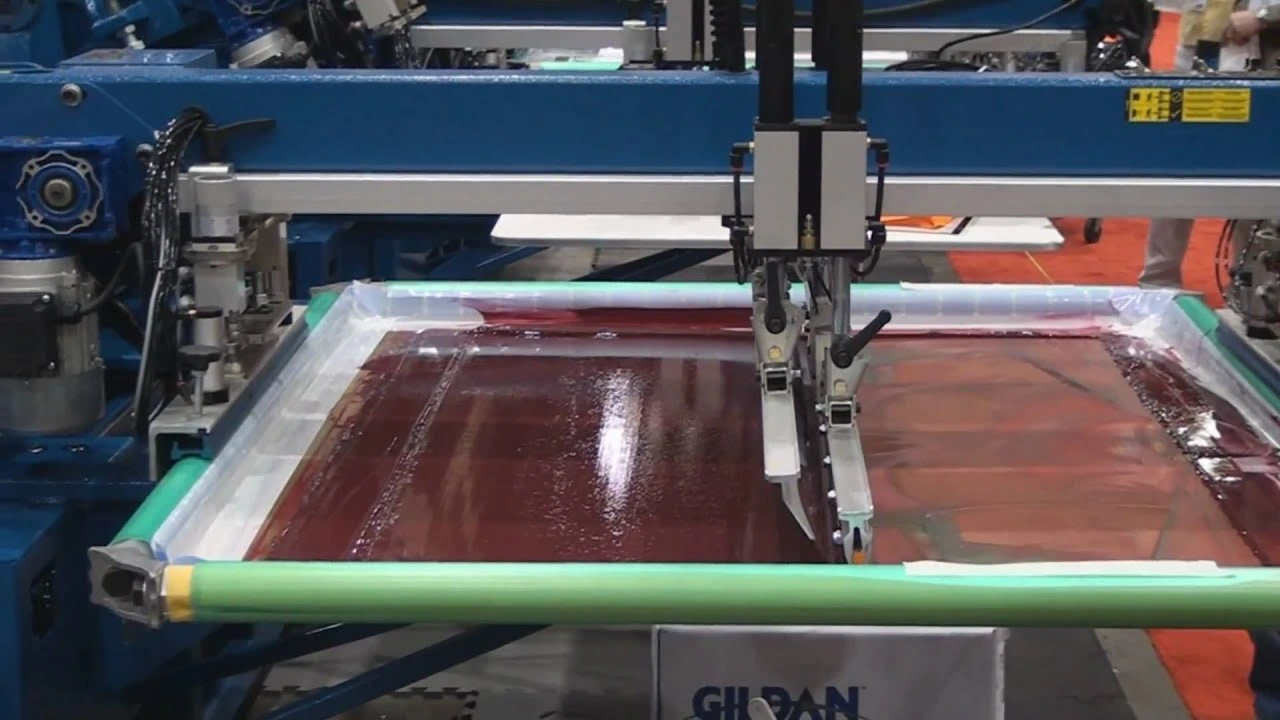
Automatic screen printing equipment mechanizes the printing process, with machines handling squeegee strokes, platen rotation, and often garment loading. These systems range from semi-automatic single-color presses to fully automatic multi-color carousels capable of printing hundreds of garments per hour.
Benefits of Automatic Equipment:
Production speed increases dramatically, quality automatic presses can produce 300-600+ impressions per hour depending on the configuration and design complexity. This volume capability transforms your business model, allowing you to accept larger contracts and wholesale orders.
Print consistency improves substantially since machines apply identical pressure, stroke speed, and registration across every impression. This consistency is critical when producing large orders where color matching and placement must remain uniform across hundreds or thousands of pieces.
Labor efficiency gains are substantial. One operator can often manage an automatic press while handling other tasks, and some advanced systems require minimal supervision once properly set up. This efficiency dramatically improves your labor cost per unit.
The professional capability to service larger clients becomes possible. Many corporate, event, and retail accounts require volume guarantees and quick turnarounds that manual operations simply cannot fulfill reliably.
Considerations with Automatic Equipment:
The investment is substantial, typically ranging from $15,000 for entry-level automatic presses to well over $100,000 for high-end production systems. This capital requirement necessitates careful financial planning and usually business financing.
Floor space requirements increase significantly, and you’ll need dedicated facilities with appropriate electrical service, climate control, and workspace for pre- and post-printing operations.
Setup complexity is higher, particularly for color changes and new jobs. While automatic presses excel at long runs, the setup time can make very small jobs less efficient than manual printing.
When Should You Make the Upgrade?
Several clear indicators suggest it’s time to transition from manual to automatic screen printing:
Consistent Volume Threshold: When you’re regularly producing 500+ pieces per week and turning down orders due to capacity constraints, automatic equipment becomes economically justifiable. Calculate your current revenue ceiling versus potential revenue with increased capacity.
Labor Bottlenecks: If you’re employing multiple manual press operators and labor costs are consuming 40%+ of revenue, automation can dramatically improve margins while reducing physical strain on your team.
Quality Consistency Issues: When clients are rejecting orders or requesting reprints due to inconsistencies across large runs, automatic equipment’s precision becomes necessary for maintaining your reputation.
Growth Opportunity: If you have access to wholesale accounts, corporate contracts, or event business that requires guaranteed volume capability, the investment in automatic equipment opens entirely new revenue streams.
Physical Limitations: Experiencing operator fatigue, injury, or difficulty retaining workers due to the physical demands of manual printing signals that automation would improve workplace sustainability.
Making the Transition Strategically
Rather than viewing this as an all-or-nothing decision, many successful shops maintain both manual and automatic capabilities. Manual presses handle samples, small custom orders, and specialty work, while automatic equipment services high-volume accounts.
Consider starting with a quality semi-automatic press as a middle step, which automates squeegee strokes while still requiring manual platen rotation. This provides significant productivity gains at roughly half the cost of fully automatic systems.
Before committing to automatic equipment, ensure you have:
- Consistent monthly order volume to justify the investment
- Physical space that meets equipment requirements
- Capital or financing secured with realistic ROI projections
- Training resources to properly operate and maintain the equipment
- A business plan for marketing your increased production capacity
If you’re evaluating whether automatic screen printing equipment makes sense for your business growth stage and want to know more about the available options and configurations, researching specific models and their capabilities helps ensure you select equipment that aligns with your production needs and budget constraints.
The right time to upgrade is when your current equipment actively limits growth rather than simply being labor-intensive. With proper planning and realistic volume projections, the transition to automatic screen printing can be the catalyst that transforms a small operation into a thriving, scalable production business.