
Table Of Contents
- Why Early Warning Signs Matter
- Water Heater Signs Worth Watching
- Leaks, Moisture, And Rust
- Changes In Water Temperature
- Popping, Rumbling, And Hissing Sounds
- Rusty, Cloudy, Or Smelly Hot Water
- Safe Checks Homeowners Can Make
- A Simple Water Heater Maintenance Plan
- Repair Or Replace: How To Think It Through
- When To Call For Professional Help
- Common Questions About Water Heater Trouble
In Northern Virginia, a water heater problem can become much more disruptive when a busy household loses hot water or a slow leak reaches finished flooring, a utility room, or a basement. Knowing what to watch for helps homeowners respond before a minor issue becomes a larger repair. If you are evaluating a water heater in Northern Virginia, start with changes in performance, visible moisture, unusual sounds, and the overall condition of the unit.
Water heaters work with hot water, pressure, and either gas or electricity, so caution matters. A quick visual check does not replace professional service, but it can help you recognize when it is time to stop troubleshooting and get qualified help.
Why Early Warning Signs Matter
Many water heater failures develop gradually. A household may first notice a shorter shower, a small wet spot near the tank, or a new rumbling sound during heating. Left alone, those changes can lead to water damage, unreliable hot water, wasted energy, or a sudden failure at an inconvenient time. Early attention can sometimes preserve more repair options and give homeowners time to make a measured decision rather than reacting to an emergency.
Water Heater Signs Worth Watching
Pay attention when normal routines change. Common warning signs include hot water running out faster than usual, inconsistent temperatures, puddles around the unit, new popping or hissing sounds, rusty or cloudy hot water, repeated resets, frequent repairs, or an unexplained rise in energy use. One symptom does not diagnose the problem, but a pattern is worth documenting.
Leaks, Moisture, And Rust
Where To Look
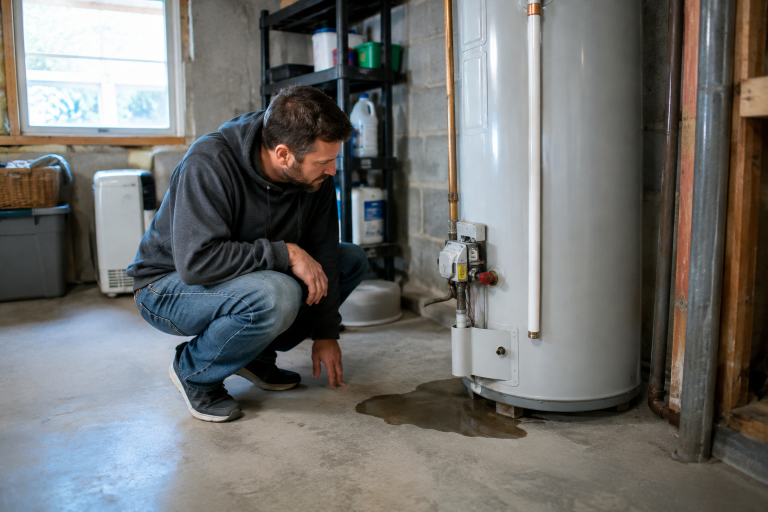
Without touching hot pipes or electrical components, inspect the floor beneath the water heater, nearby fittings, valves, and the drain line. Look for damp flooring, rust streaks, white mineral residue, or moisture on nearby drywall, baseboards, cabinets, and stored belongings. In finished Northern Virginia basements, even a slow drip can affect carpet, trim, or drywall before the water source is obvious.
Why The Leak Location Matters
A loose connection, valve, or discharge line may call for a different repair than a leak from the tank body. Water seeping through the tank itself can indicate internal corrosion and may require replacement. Do not dismiss a small recurring puddle. A drip that lands in the same place day after day can eventually stain flooring, damage materials, and encourage hidden moisture problems.
Changes In Water Temperature
Lukewarm water, a shower that turns cold sooner than expected, repeated hot-and-cold swings, or water that is suddenly much hotter than normal all deserve attention. Possible causes can include sediment buildup, a worn heating element or burner component, a thermostat issue, a damaged dip tube, or a system that no longer matches the household’s demand.
Do not open electrical panels or adjust gas controls to investigate a temperature problem. Temperature settings should be handled carefully, particularly in homes with young children, older adults, or people with reduced heat sensitivity. Before making changes that could increase burn risk, read about how hot liquids cause scald burns.
Popping, Rumbling, And Hissing Sounds
A tank-style heater may make some operating noise, but a new or worsening sound is useful information. Popping or crackling can occur when water moves through sediment near the bottom of a tank. Rumbling may also relate to mineral buildup shifting during a heating cycle. Hissing can point to escaping water, pressure discharge, or a heating-related issue. Banging may involve water flow, pressure, or buildup in the system. Sound alone cannot confirm the cause, but it should not be ignored when paired with reduced performance or moisture.
Rusty, Cloudy, Or Smelly Hot Water
If discolored water appears only at hot taps, compare hot and cold water at more than one faucet. Rust-colored or cloudy hot water can be related to corrosion, sediment, plumbing materials, or an aging anode rod. A persistent sulfur-like odor that appears mainly in hot water also deserves review. If both hot and cold water have the same issue, the source may be elsewhere in the plumbing or water supply.
Safe Checks Homeowners Can Make
- Find the model label and identify whether the unit is gas, electric, tankless, or heat pump equipment.
- Look for visible moisture, corrosion, and new residue without touching hot surfaces.
- Listen during a normal heating cycle and note sounds that were not present before.
- Compare current hot-water performance with the household’s usual routine.
- Check whether a breaker has tripped, but do not repeatedly reset it.
- Keep paper, boxes, cleaning products, and other stored items away from the unit.
- Write down symptoms, timing, error messages, and recent changes in water use.
A Simple Water Heater Maintenance Plan
Monthly And Seasonal Checks
Once a month, look for moisture, rust, mineral deposits, new noises, and changes in heating performance. Keep the service area clear. As seasons change, review exposed pipes for damage or poor insulation and make sure vents and access areas remain unobstructed. Winter demand can make a marginal hot-water supply more noticeable, especially when several people use showers close together.
Manufacturer-Directed Service
Maintenance needs differ by equipment type, water conditions, and manufacturer instructions. Tank flushing, anode-rod inspections, filter cleaning, and condensate-line care may be appropriate for some units. Owners of heat pump models can review routine heat pump water heater servicing for examples of access, filter, and drain considerations. Work involving gas, live electrical parts, or pressure-relief components should be left to a qualified professional.
Repair Or Replace: How To Think It Through
Repair may make sense when the tank is structurally sound, and the issue involves a replaceable valve, thermostat, heating element, burner-related component, or control. Replacement may be the more practical option when the tank body leaks, corrosion is extensive, breakdowns are frequent, parts are difficult to obtain, or the unit consistently cannot meet normal demand. Age matters, but condition, service history, safety, capacity, and operating cost are more useful decision factors than age alone.
When To Call For Professional Help
Call for help promptly when water is spreading across the floor, the tank itself is leaking, the pressure-relief line is discharging water, a breaker trips repeatedly, there is no hot water after basic external checks, or there are signs of overheating, scorching, or damaged wiring. If you smell gas, move away from the area, avoid flames and electrical switches, and contact the gas utility or an appropriate emergency service provider. Shut off water only if it is safe to do so.
Common Questions About Water Heater Trouble
Can A Water Heater Fail Without Warning?
Yes, sudden failures can occur. However, many units show earlier clues such as reduced capacity, inconsistent temperatures, leaks, corrosion, or new noises.
Is A Small Water Heater Leak Serious?
It can be. A fitting may be repairable, but a leaking tank can cause rapid water damage and often signals a more serious condition.
Why Does A Water Heater Make Popping Sounds?
Sediment and trapped water are common explanations in tank-style units. A loud, new, or worsening noise should be evaluated.
What Is The Safest First Step During A Water Heater Emergency?
Stay clear of hot water, gas odors, exposed wiring, and standing water near electrical equipment. Then contact the appropriate qualified help based on the symptom.
Water heaters often provide useful clues before a major failure. Regular visual checks, attention to performance changes, and timely service can reduce disruption in a Northern Virginia home. The right next step is not always replacement. It is identifying the real problem and choosing the safest response.